

Oldupai Gorge, also written as Olduvai Gorge, is one of the most important historical sites in East Africa. The name Oldupai comes from a Maasai word that means the wild sisal plant that grows in this area. Many people still use the name Olduvai Gorge, and both names refer to the same place. Oldupai Gorge is well known for research and learning, especially for people interested in early human history.
Oldupai Gorge is located about 40 kilometers northwest of the Ngorongoro Crater in northern Tanzania. The gorge is about 90 meters deep and stretches across a wide area. It lies within the Ngorongoro Conservation Area and close to the Serengeti ecosystem. Because it is in the shadow of the Ngorongoro Highlands, the area receives very little rainfall. This makes it one of the driest areas in this part of Tanzania.
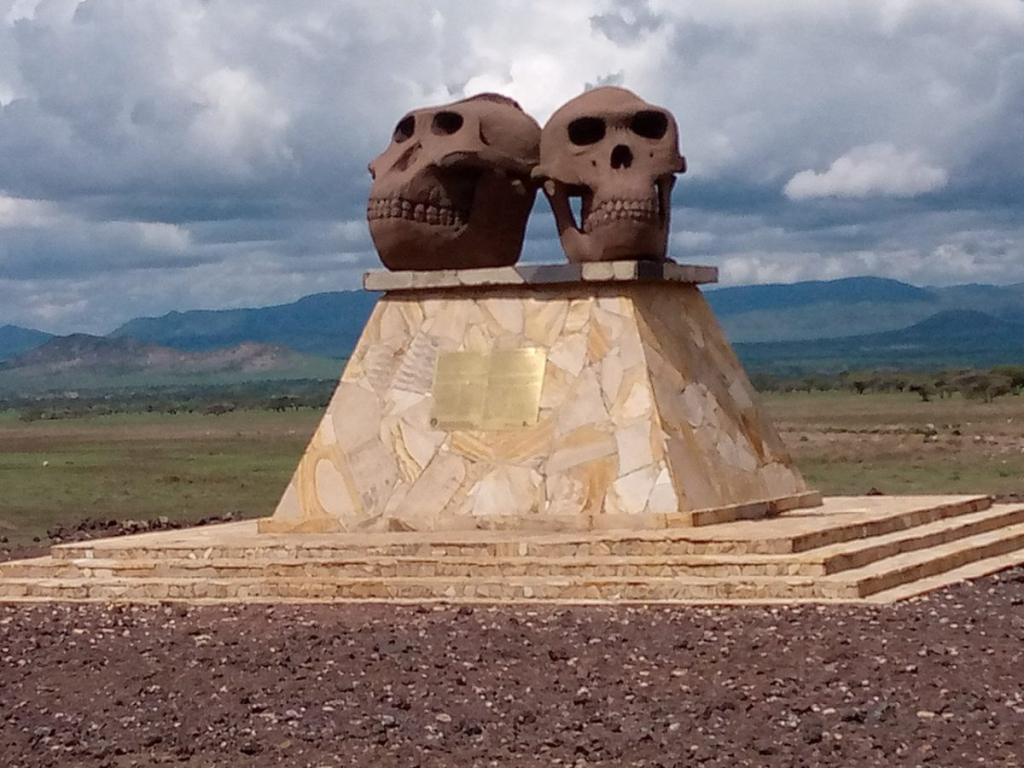
This site plays a major role in the study of human evolution. Many of the oldest human remains and tools were discovered here. Because of these findings, many researchers refer to Oldupai Gorge as the Cradle of Mankind. The discoveries made at this site helped scientists understand how early humans lived, walked, and used tools. These findings changed the way the world understands human history.
Oldupai Gorge first became known to the European world in 1911. It was discovered by Professor Wilhelm Kattwinkel, a German butterfly collector and professor. While searching for butterflies, he came across fossils and bones that later proved to be very important. After this discovery, many researchers began working in the area.
Today, Oldupai Gorge is a popular stop for visitors traveling between Serengeti National Park and Ngorongoro Crater. Visitors can learn about early human life through guided tours and museum displays. Oldupai Gorge remains a key place for research, education, and understanding the early story of humans in East Africa.




