
The Great Wildebeest Migration is a major safari attraction in East Africa; particularly Nothern Serengeti National Park and Masai Mara National Reserve, taking place yearly in Serengeti National Park and Masai Mara. Millions of wildebeests, zebras, and gazelles follow rainfall for grass and water. Travelers book migration safaris to witness river crossings, calving season, predator action, and guided wildlife viewing in Tanzania and Kenya. See our popular wildebeest migration safari packages for both Tanzania and Kenya below.
Great Wildebeest Migration in Tanzania & Kenya Explained
-
 USD 2365 Per Person
3-Day Serengeti Flying Safari Itinerary
View Tour - USD 1474 Per Person
3-Day Serengeti Wildebeest Migration Safari Tour
View Tour - USD 1474 Per Person
3 Days Serengeti Wildlife Safari Big Five Tour
View Tour - USD 1980 Per Person
4 Days Serengeti & Ngorongoro Crater Safari Tour
View Tour - USD 2026 Per Person
4 Days Serengeti Wildlife Viewing Safari
View Tour - USD 2440 Per Person
5-Day Best of Tanzania Wildlife Safari Adventure
View Tour - USD 3356 Per Person
6-Day Maasai Mara & Serengeti Wildlife Safari Tour
View Tour - USD 3156 Per Person
6-Day Bwindi Gorilla Trekking & Serengeti Wildlife Safari
View Tour - USD 4159 Per Person
6-Day Rwanda Gorilla Trekking & Serengeti Wildlife Safari
View Tour - USD 4832 Per Person
8-Day Rwanda Gorilla Trekking & Tanzania Wildlife Safari
View Tour - USD 4099 Per Person
8-Day Bwindi Gorilla Trekking & Tanzania Wildlife Safari
View Tour - USD 6011 Per Person
10-Day Gorilla Trekking & Wildebeest Migration Safari
View Tour - USD 5156 Per Person
12-Day Uganda Rwanda Primate Trekking & Tanzania Wildlife Safari
View Tour - USD 6687 Per Person
15-Day Gorilla Trekking, Masai Mara & Serengeti Safari
View Tour


What the Great Wildebeest Migration Is & Why It Happens
The Great Wildebeest Migration is one of the largest wildlife movements on Earth. It takes place every year across northern Tanzania and southwestern Kenya, within the Serengeti and Masai Mara ecosystem. Millions of wildebeests move in search of fresh grass and water, following seasonal rainfall patterns.
This migration also includes large numbers of zebras, gazelles, and other grazing animals. Their movement supports predators, birds, and scavengers, making the migration a complete natural system rather than a single wildlife event.
The migration does not follow fixed calendar dates. Weather patterns, especially rainfall, determine where the animals move and how long they stay in each region.
Why the Wildebeest Migration Happens
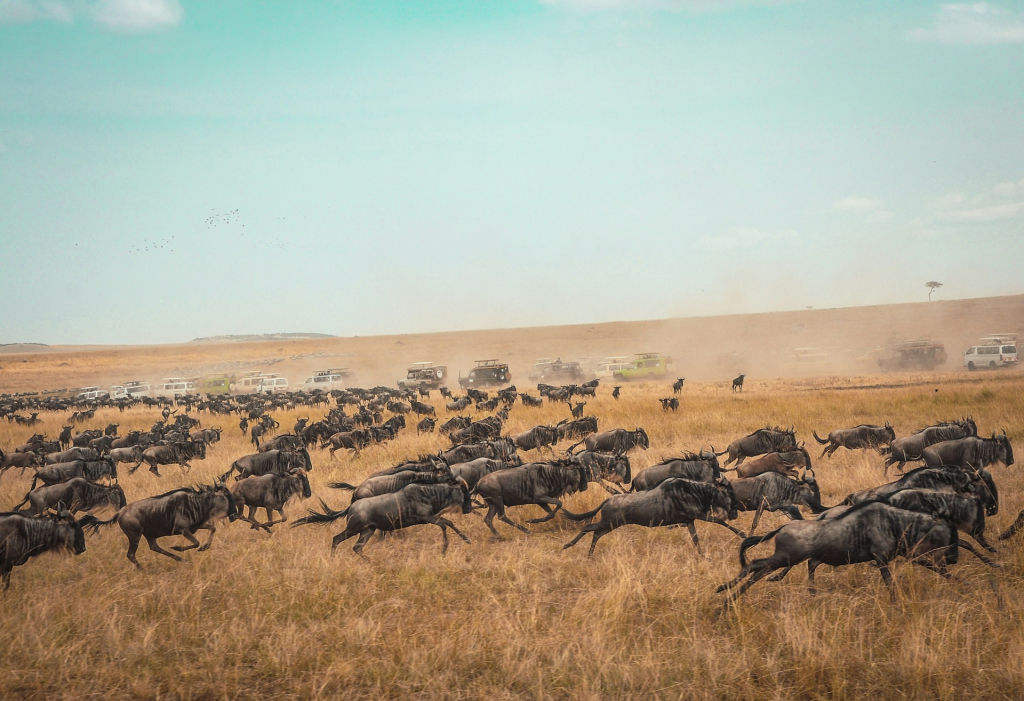
The main reason for the migration is survival. Wildebeests depend on fresh pasture and water. When grass dries out in one area, the herds begin moving toward regions with new growth.
Rainfall acts as the trigger. When rain falls in distant areas, grass begins to grow, and the animals follow that change. This constant movement forms a circular route across the Serengeti and Masai Mara ecosystem.
Predators follow the herds. Lions, hyenas, leopards, cheetahs, vultures, and crocodiles depend on the migration for food. Rivers, hills, valleys, and open plains all shape how the migration unfolds.
Migration Challenges & Natural Losses
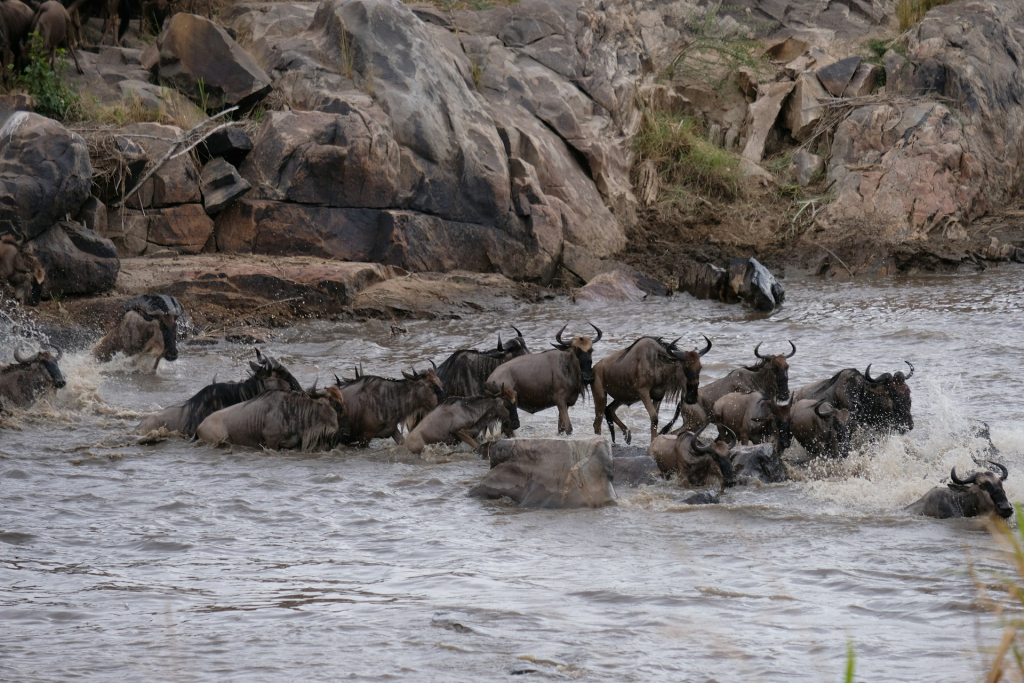
The migration is dangerous for the animals involved. Many wildebeests die each year due to exhaustion, predation, and river crossings.
Major obstacles include rivers such as the Mara River and the Grumeti River. These rivers contain strong currents, crocodiles, and hippos. Some animals drown, while others are attacked during crossings.
Young calves and weaker animals are most vulnerable. Despite these losses, the migration continues each year because it remains the best way for the species to survive.
Wildebeest Migration by Month
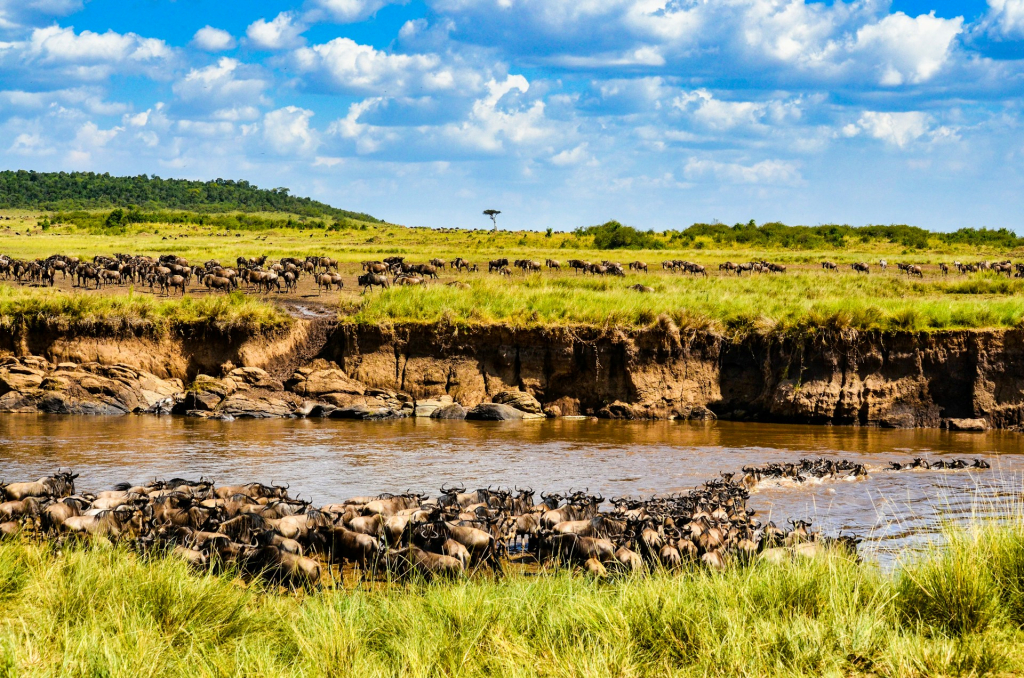
The migration follows a general yearly cycle. Exact timing may change each year, but the pattern remains similar.
December to March
During this period, the herds are mainly in the southern Serengeti and Ndutu plains, close to the Ngorongoro Conservation Area.
This is the calving season. Thousands of young wildebeests are born each day. Grass is short and rich in nutrients. Predators are active due to the presence of vulnerable newborns.
April to May
As the grass in the south becomes limited, the herds begin moving west and north.
This period marks the start of long movement. Rainfall increases in parts of the Serengeti, and the animals travel in large groups toward the central and western regions.
June to July
The herds concentrate in the western Serengeti and along the Grumeti River.
River crossings begin during this time. Crocodiles wait in the water, and predators follow the herds closely. This phase includes mating activity and intense movement.
August to October
This is the period when the herds reach northern Serengeti and cross into Kenya’s Masai Mara.
The Mara River crossings take place during these months. These crossings are unpredictable and can happen at different points along the river. This period is often considered the most dramatic stage of the migration.
Late October to November
As grass begins to grow again in the southern Serengeti, the herds slowly move back south.
The animals return to Ndutu and surrounding plains to prepare for the next calving season. Movement is calmer, with fewer river crossings.
Best Time to See the Great Wildebeest Migration
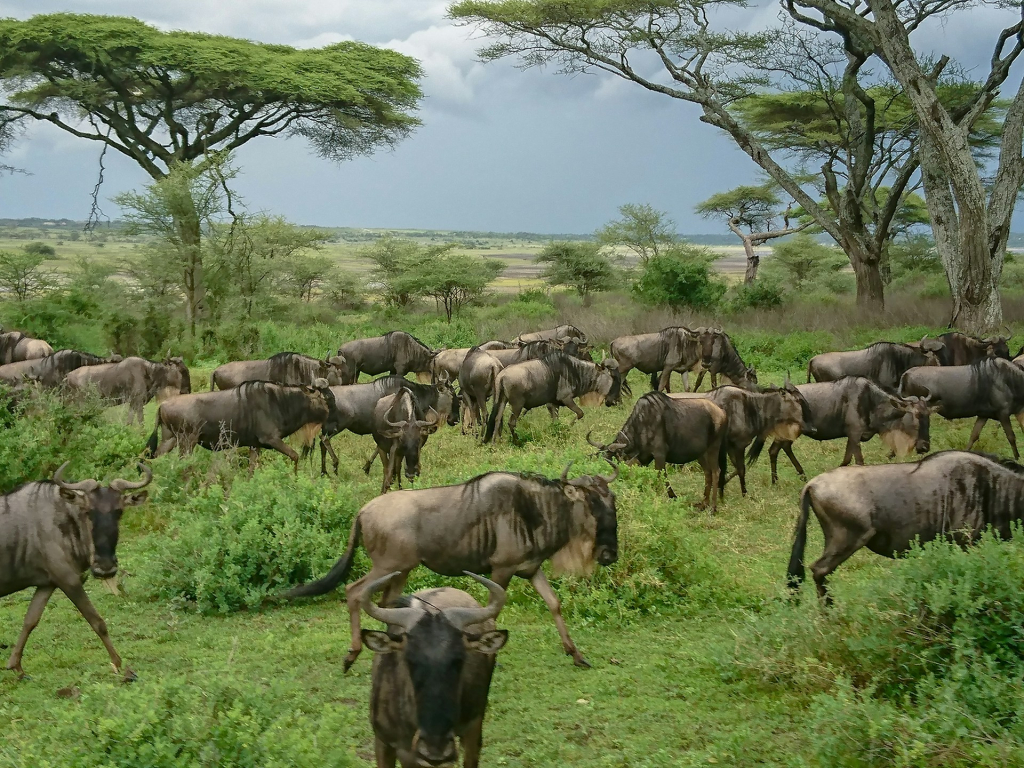
The Great Wildebeest Migration occurs throughout the year.
For river crossings, June to October offers the best chance, especially in western and northern Serengeti and Masai Mara.
For calving and predator activity, January to February is the most suitable period.
Because the migration depends on rainfall, sightings can never be guaranteed. Patience and timing are important.
Where to Stay During a Migration Safari
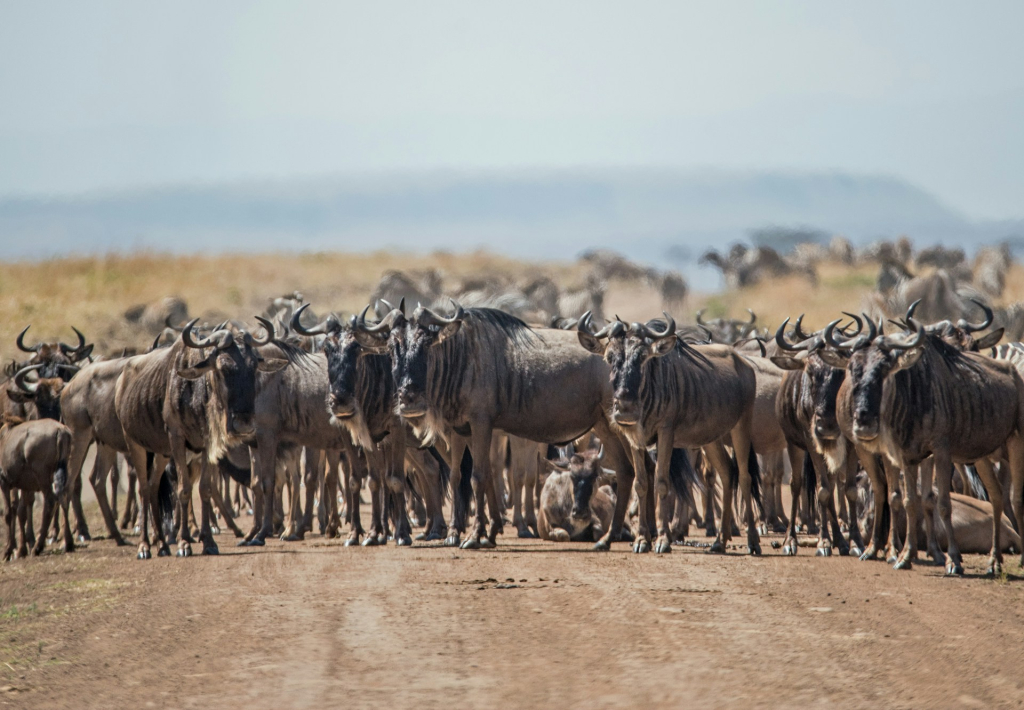
Accommodation options range from mobile camps to permanent lodges.
Mobile camps move with the herds and allow visitors to stay close to migration routes. Fixed camps in central, western, and northern Serengeti also offer access to migration areas depending on the season.
Most accommodations provide meals, bedding, and comfortable facilities suitable for long safari stays.
Why the Great Wildebeest Migration Is Important
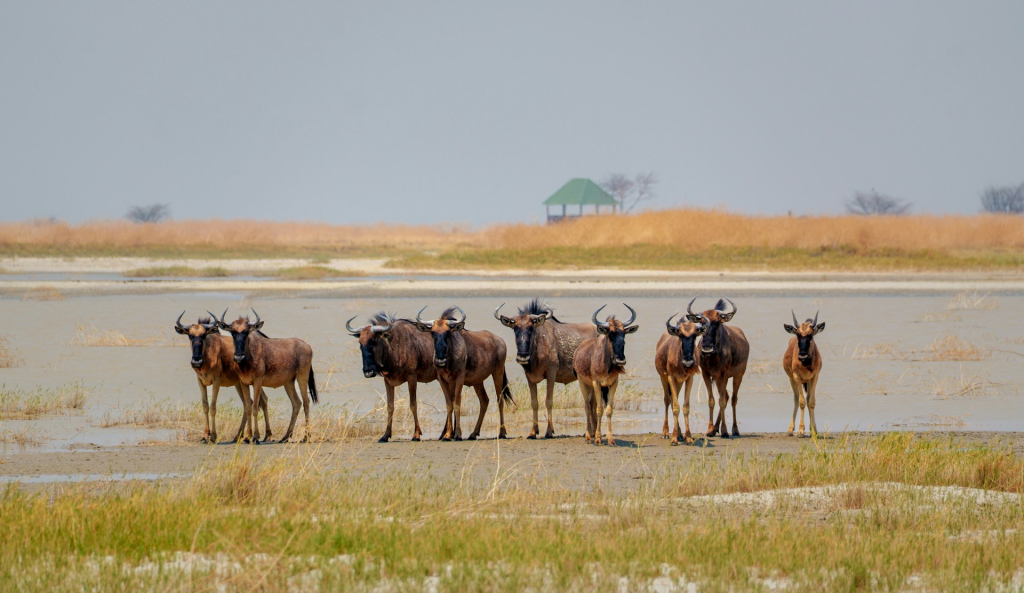
The Great Wildebeest Migration supports the entire Serengeti Mara ecosystem. It feeds predators, enriches soil, spreads seeds, and sustains wildlife balance.
It also attracts researchers, conservationists, photographers, and visitors from around the world. This movement is unique to East Africa and remains one of the most studied wildlife phenomena on the planet.
In conclusion, the great wildebeest migration is a natural wildlife movement shaped by rain, grass growth, and survival instincts. It takes place across Tanzania and Kenya and involves millions of animals moving through rivers, plains, and predator territories.
Understanding the migration cycle helps travelers choose the right time and location to observe it. While timing cannot be predicted exactly, the migration continues year after year and remains one of Africa’s most important natural events.
Book Now




