
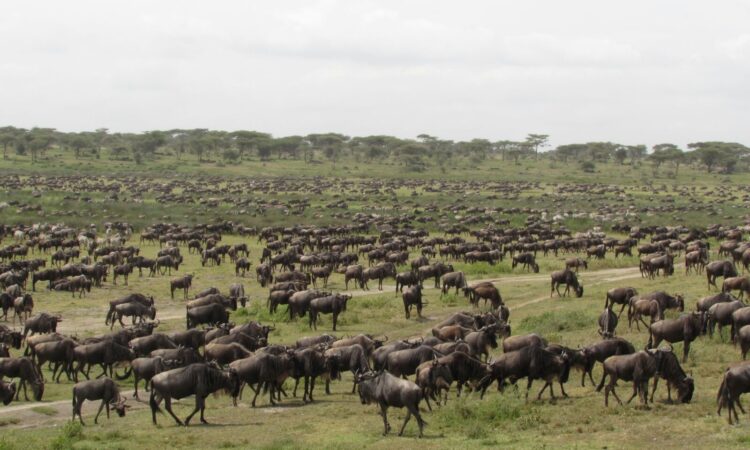
The Matiti Plains are part of the wide open areas found within Serengeti National Park. The park is known as a land of many plains and takes its name from a Masai word meaning the land that does not end. The Matiti Plains are one of these important open areas and play a key role in wildlife movement and breeding.
One of the main features of the Matiti Plains is the presence of the Twin Hills of the Serengeti. These hills rise above the flat land and act as a clear landmark in the area. Animals often move around the base of the hills while feeding and resting. The open nature of the plains makes wildlife easy to observe from a distance.
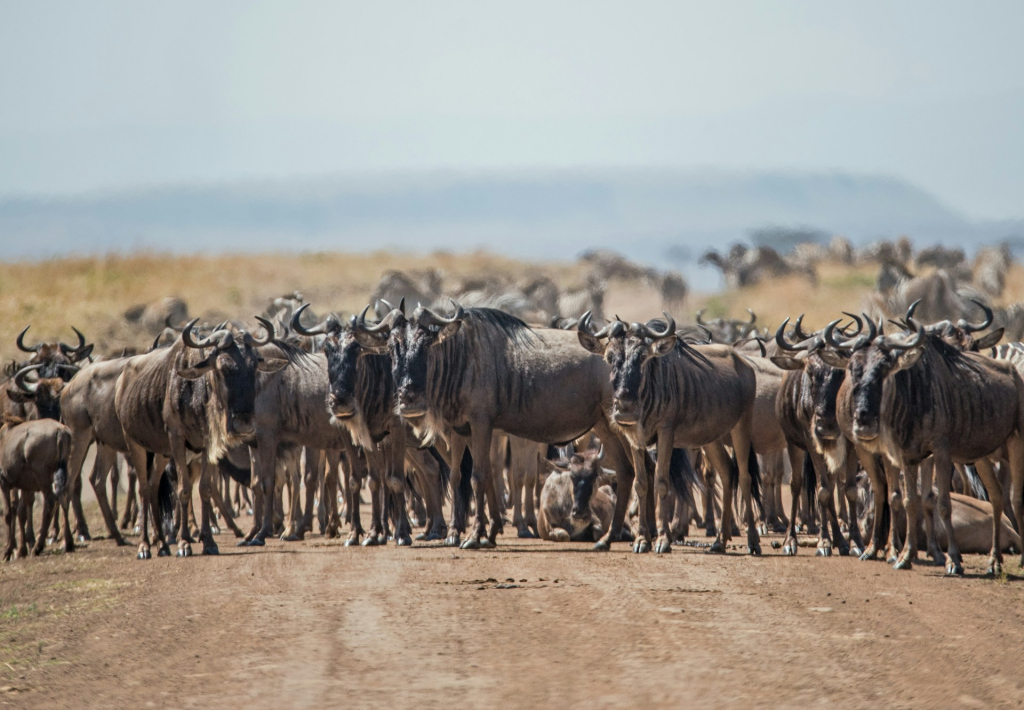
The Matiti Plains are especially important for wildebeests. Large herds of female wildebeests gather in this area during certain months of the year. From January to March, the wildebeests move into the Matiti Plains to give birth. This period is known as the calving season. The short grass found in the Matiti Plains is ideal for young calves because it is easy to feed on.
Short grass also provides better safety for newborn wildebeests. Predators find it harder to hide in areas where the grass is low. This allows adult wildebeests to spot danger early and protect their young. Because of this, the Matiti Plains become very active during the calving months, with many animals spread across the land.
One of the notable facts about wildebeests in the Matiti Plains is how quickly newborn calves adapt. It takes only about seven minutes for a young wildebeest to stand after birth. This quick movement helps the calf stay close to the herd and reduces the risk of being left behind.
The Matiti Plains support an important stage in the life cycle of wildebeests and are part of the wider seasonal movement within Serengeti National Park. The combination of open land, short grass, and clear visibility makes the plains suitable for breeding and feeding.
For visitors to Serengeti National Park, the Matiti Plains offer a chance to see large herds and young animals during the early months of the year. This area highlights the natural rhythm of life on the Serengeti plains and remains an important part of the park’s wildlife system.


